
Dermal Filler · Scottsdale, AZ

Dermal fillers in Scottsdale
structure, not volume

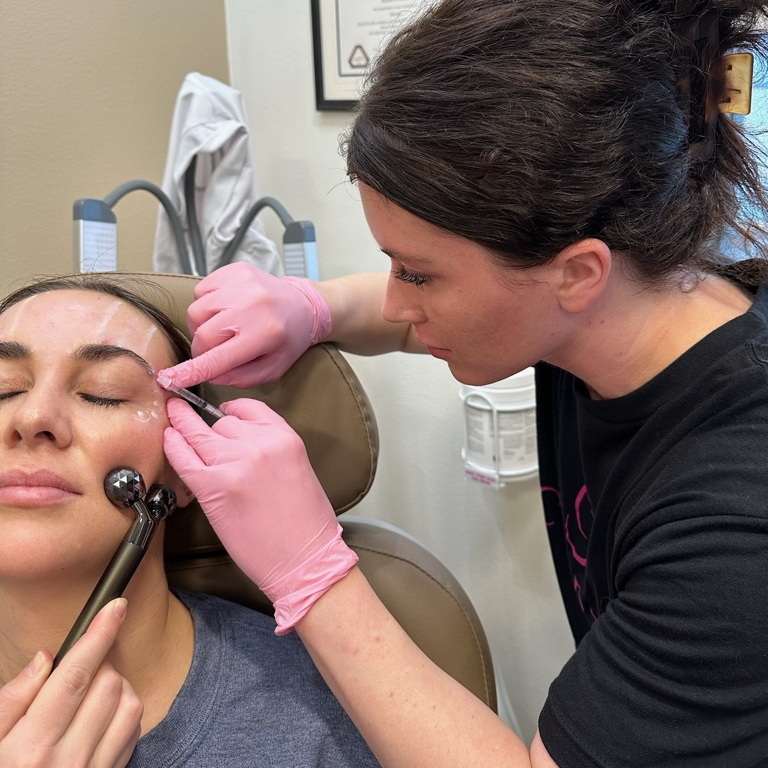
Filler restores what time removed — cheek projection, jaw definition, temple fullness. Placed by a national clinical trainer for Galderma and Prollenium, the companies that make the products. We map your face before a syringe is opened.

Treatment type
Hyaluronic acid injection
Appointment
30–60 minutes
Results
Immediate, settled at 2 weeks
Typically lasts
9–18 months by area
Trained by the manufacturers
Galderma and Prollenium
A nurse practitioner injects you
Never delegated
Cannula where it is safer
Needle where it is better
We will dissolve our own work
And anyone else's
What dermal filler is

Filler replaces volume,
it does not lift skin

Most dermal filler is hyaluronic acid — a sugar your body already makes and uses to hold water in the skin. Manufactured into a gel and placed under the skin, it restores volume in a compartment that has deflated, or adds structure where you never had much.

The distinction patients almost never hear: filler treats volume loss, not skin laxity and not movement lines. If your cheek has flattened, filler helps. If your skin has loosened, filler placed to compensate makes a face look heavier, not younger — that is where the overfilled look comes from. And a line that only appears when you move is a neuromodulator conversation, not a filler one.

Getting that assessment right is most of the work. It is also why we would rather use one syringe well than three to chase a shadow that was never a volume problem.

What it is
  • A gel that restores volume in a specific facial compartment
  • Reversible — hyaluronic acid can be dissolved if you dislike it
  • Structural: cheeks, jaw, chin and temples change the shape of a face
  • Immediate, with swelling settling over roughly two weeks
What it isn't
  • A treatment for movement lines — that is Botox or Dysport
  • A substitute for a facelift; filler cannot lift loose skin
  • A skin-quality treatment — pigment and texture need peels or microneedling
  • Permanent, and that is a feature rather than a limitation
How we price filler

By the syringe,
never by the package

Filler is priced per syringe, because that is the unit you actually receive. Package pricing hides how much product is going in — and in this treatment, less product placed well is usually the better outcome. We map your face, tell you how many syringes and where, and quote the total before anything is opened.

Book a consultation

Product choice and syringe count are decided at consultation. We never require a minimum number of syringes.

Where filler works

Ten areas we treat
with filler

Filler is a structural treatment. Below is every area we place it, what each one actually achieves, and roughly how long it lasts there — movement and blood supply differ across the face, so duration does too.

Book a Consultation

Cheeks & midface

Lasts 12–18 months

The cheek carries the light on a face. When it flattens, the folds below deepen and the jawline softens even though nothing changed there. Restoring projection here often resolves three complaints at once.

Restores midface projection

Nasolabial folds

Lasts 9–12 months

The lines from nose to mouth. Often better treated by rebuilding the cheek above them than by filling the fold directly — filling the fold alone is what creates a heavy, shelf-like look.

Softens nose-to-mouth lines

Marionette lines

Lasts 9–12 months

The lines running down from the corners of the mouth. Treated alongside chin and jaw support so the lower face is rebalanced rather than patched.

Lifts downturned mouth corners

Jawline definition

Lasts 12–18 months

Sharpens the angle between face and neck. Filler adds bone-like structure along the mandible; for a heavy or square jaw, masseter Botox does the opposite job.

Defines a soft jawline

Chin projection

Lasts 12–18 months

The most under-assessed point on the face. A chin set slightly back throws off profile balance and makes lips look overfilled when they are not.

Balances the profile

Temples

Lasts 12–18 months

Hollow temples narrow the upper face and make the brow look heavy. A small amount here restores the oval shape and is one of the least noticed, most effective corrections.

Restores upper-face width

Under-eye · tear trough

Lasts 9–12 months

The most technically demanding area on the face. Treated with a cannula, conservatively, and only when the hollow is genuinely volumetric rather than pigment or skin quality.

Softens under-eye hollows

Lips

Lasts 6–12 months

Definition, border and hydration using micro-droplet technique. Volume for its own sake is not what we do.

Definition, not just volume

Perioral · smoker's lines

Lasts 6–9 months

Fine vertical lines above the upper lip, treated with a soft filler and often combined with a small amount of neuromodulator and resurfacing.

Smooths vertical lip lines

Hands

Lasts 12–18 months

Hands age faster than faces and are almost never treated. Filler restores the padding over the tendons and veins.

Restores volume on the back of the hand
How filler works

What is happening
under the skin

Filler does not stretch, tighten or lift skin. It occupies space in a specific tissue plane and holds water. Here is the sequence.

01

The compartment is identified

Facial fat sits in discrete compartments that deflate at different rates. We assess which one has lost volume — the visible problem is often a plane or two away from where you would point.

02

Product is matched to the plane

A firm, high-lift gel belongs on bone for structure. A soft, low-cohesion gel belongs superficially for fine lines. Using the wrong one in the wrong plane is the single most common cause of a lumpy or puffy result.

03

Placement, cannula or needle

A blunt cannula pushes vessels aside rather than piercing them, so it is used in the tear trough, temples and midface. A needle gives precision on bone and at the lip border. The choice is anatomical, not habitual.

04

Hydration and integration

Hyaluronic acid binds water, so the area swells for several days then settles. The gel integrates with surrounding tissue over about two weeks — which is when the result is real and when we review it.

05

Gradual breakdown

Your body metabolises the gel over months. Mobile areas like lips clear faster than static areas like the jaw, which is why duration differs across a single treatment.

Your appointment

Thirty to sixty minutes,
and you drive yourself home

Facial assessment and mapping

We look at your face in three dimensions and at rest — projection, proportion, asymmetry and profile. This is where syringe count is decided, and where we tell you if filler is not the right answer.

Your quote, before anything opens

Areas, product, number of syringes, total. Nothing is drawn up until you have agreed to it.

Numbing

Topical anaesthetic for 15 to 20 minutes. Most fillers also contain lidocaine, so comfort improves as the treatment progresses.

Placement

Cannula or needle depending on the area. You will be sat upright and shown a mirror partway through so you are part of the decision.

Aftercare and your two-week review

Ice, arnica if you bruise easily, and written aftercare. We book your complimentary review at two weeks, when swelling has resolved and the result is genuinely final.

Real patient results

Dermal filler
before and after

Individual results vary. All photographs are of KORA patients, unretouched, in identical lighting and framing, published with written consent.

How long filler takes, and how long it lasts

Filler timeline, day by day

Dermal filler results are visible immediately but swollen for several days. Swelling resolves within about a week and the final result settles at two weeks. Depending on the product and area, filler lasts 9 to 18 months.

TreatmentRecovery progressesLater stage

Treating before an event? Allow four weeks, not two. Filler bruises more than neuromodulators and you want a review window before the date.

The overfilled look

It is almost never
too much product

Overfilled faces are usually the result of product placed in the wrong plane, or of chasing a shadow that was caused by skin laxity rather than volume loss. Adding filler to compensate for loose skin widens a face — so the next appointment adds more, and the face widens further. We assess laxity separately and will tell you when the honest answer is that filler is the wrong tool.

  • Assessed in three dimensions, at rest and in motion
  • Under-correction by default on a first visit
  • We will decline to treat when filler is not the answer
Safety

Filler carries real risk.
That is why an NP places it

The serious complication in filler is vascular occlusion — product entering or compressing a blood vessel. It is rare, it is time-critical, and it is managed with hyaluronidase by someone who recognises it immediately. We use a blunt cannula in the highest-risk areas, aspirate where a needle is used, and keep hyaluronidase on site at all times. This is the argument for who holds the syringe rather than which brand is in it.

  • Cannula technique in tear trough, temple and midface
  • Hyaluronidase on site at every appointment
  • Injected only by a nurse practitioner
Correcting other work

We dissolve filler
without a lecture

Migrated lip filler, an overfilled midface, a tear trough that has gone puffy — all common, all correctable. Hyaluronidase breaks down hyaluronic acid within days, and we can rebuild afterwards once the tissue has settled, usually at two to four weeks. A significant share of our filler work is correction, and there is no judgement attached to it.

  • Dissolving assessed and quoted separately
  • Rebuild after the tissue settles, if you want one
  • No judgement about where the work was done
Choosing a product

Not all filler
is the same gel

Hyaluronic acid fillers differ in how firm they are, how much they lift, how much water they attract and how long they last. A firm, high-lift gel belongs on bone at the cheek or jaw. A soft, low-swell gel belongs at the lip border or under the eye. Matching gel to plane is the difference between structure and puffiness — and it is the part of the decision most patients are never walked through. Katie trains other injectors on exactly this for Galderma and Prollenium.

Discuss your options
Filler, Sculptra, Botox or Kybella

Which one do you actually need?

These four do genuinely different jobs and are routinely confused. Filler adds volume now. Sculptra rebuilds your own collagen slowly. Botox relaxes muscle. Kybella removes fat. If your line is only there when you move, no filler will fix it — and if your cheek has deflated, no neuromodulator will.

Most patients over thirty-five combine two of these. The assessment decides which two.
CompareThis treatmentDermal fillerPairs withSculptraPairs withBotoxAlternativeKybella
Best forVolume loss — cheeks, jaw, chin, temples, lipsGradual, whole-face collagen rebuildingLines caused by movementFat under the chin
What it doesAdds structure and volume immediatelyStimulates your own collagen over monthsRelaxes the muscle folding the skinPermanently destroys submental fat cells
OnsetImmediate, settled at 2 weeks6–12 weeksDay 3–56–12 weeks
Typically lasts9–18 monthsUp to 2 years3–4 monthsPermanent
Dermal filler cost

How much do dermal fillers cost
in Scottsdale?

Filler is priced per syringe rather than per area, because the syringe is what you actually receive. Most Scottsdale practices price between $650 and $1,100 a syringe depending on the product. Ask any practice how many syringes their package includes before comparing prices — that is where the difference usually hides.
Quoted at consultation
Cheek & midface · typically 1–2 syringes
Book a Consultation
Filler is priced per syringe · No minimum syringe requirement · Consultation and two-week review are complimentary
Treatment areaTypical syringesPricedEstimated cost
Cheeks & midface1–2 syringesPer syringeQuoted at consultation
Nasolabial folds1 syringePer syringeQuoted at consultation
Marionette lines1 syringePer syringeQuoted at consultation
Jawline definition2–4 syringesPer syringeQuoted at consultation
Chin projection1–2 syringesPer syringeQuoted at consultation
Temples1–2 syringesPer syringeQuoted at consultation
Under-eye (tear trough)1 syringePer syringeQuoted at consultation
Lips1 syringePer syringeQuoted at consultation
Perioral / smoker's lines1 syringePer syringeQuoted at consultation
Hands1–2 syringesPer syringeQuoted at consultation
Filler dissolving (hyaluronidase)Per sessionPer syringeQuoted at consultation
Consultation & two-week reviewComplimentary
Meet your injector

Katie Manhardt, MSN, FNP-C, Founder & Nurse Practitioner

Katie Manhardt is a board-certified family nurse practitioner and the founder of KORA Aesthetics. She holds a nursing degree from the University of Northern Colorado and a master's from the University of Cincinnati, and serves as a national clinical trainer for both Galderma and Prollenium — teaching injection technique and facial anatomy to other medical professionals across the country.

She practises facial balancing: assessing the face as a single structure against its midline rather than treating complaints one at a time. Every filler appointment at KORA is performed by Katie or by Victoria Patterson, NP.

Galderma National Clinical TrainerProllenium National Clinical TrainerBoard-Certified Family Nurse Practitioner (FNP-C)MSN, University of Cincinnati · BSN, University of Northern Colorado

Trained by the manufacturers

Katie is a national clinical trainer for Galderma and Prollenium — the companies behind Restylane and Revanesse. She teaches other injectors how to place these products safely.

A nurse practitioner, every time

Filler carries vascular risk that a neuromodulator does not. Every appointment is performed by Katie or Victoria Patterson, NP, with hyaluronidase on site.

Loved by patients

What Scottsdale says about filler at KORA

Rated 5 out of 5REPLACE — paste a verbatim Google review and the reviewer's real first name
Sample review
Google
Filler preparation & aftercare

How to prep & what to do after

Bruising is the thing to plan around

  • Book at least four weeks before any event. Filler bruises more than neuromodulators and you want a review window before the date.
  • If medically appropriate and cleared by your physician, stop blood thinners, NSAIDs, fish oil, vitamin E and alcohol 48 hours ahead.
  • Tell us about every medication and supplement, and about any history of cold sores — lip filler can trigger an outbreak and we may prescribe antiviral cover.
  • Reschedule if you have an active skin infection or a dental procedure within two weeks either side.
  • Eat beforehand. Injections on an empty stomach are the most common cause of feeling light-headed.
  • Let us know if you are pregnant, trying to conceive or breastfeeding — we will not treat you.
Good to know

Filler questions, answered properly

Basics

What are dermal fillers?

Dermal fillers are gels — most commonly hyaluronic acid, a sugar your body already produces — injected under the skin to restore lost volume or add structure. They treat flattening and hollowing rather than movement lines or loose skin.

How long do dermal fillers last?

Between 9 and 18 months depending on the product and the area. Mobile areas such as lips clear faster than static structural areas such as the jawline, so duration varies within a single treatment.

Cost

How much do dermal fillers cost in Scottsdale?

Filler is priced per syringe and quoted at consultation. Scottsdale practices generally range from $650 to $1,100 a syringe depending on product. Most first treatments use one to two syringes, and there is no minimum requirement at KORA.

Treatment

Does filler hurt?

Less than most people expect. We apply topical numbing for 15 to 20 minutes, and nearly all modern fillers contain lidocaine, so comfort improves as treatment progresses. Lips are the most sensitive area.

How long is the swelling after filler?

Swelling peaks at day 1 to 3 and largely resolves within a week. The final result is at two weeks. Lips swell most and can look startling on day two — that is normal and not the outcome.

Results

Will filler make me look overfilled?

Not if it is assessed properly. The overfilled look usually comes from placing product in the wrong plane, or from using filler to compensate for skin laxity rather than volume loss. We under-correct by default and add at your two-week review if needed.

Can dermal filler be dissolved?

Yes. Hyaluronic acid filler is reversed with hyaluronidase, which breaks it down within days. We dissolve our own work and other providers', and can rebuild afterwards once the tissue has settled.

What is the difference between filler and Botox?

Filler adds volume and treats hollowing or lines present when your face is completely still. Botox relaxes muscle and treats lines that appear when you move. Many patients need a small amount of both, and identifying which is causing which line is most of the assessment.

Filler or Sculptra — which is better?

Neither is better; they do different jobs. Filler gives immediate, targeted structure and lasts 9 to 18 months. Sculptra stimulates your own collagen gradually over 6 to 12 weeks, gives a softer whole-face change, and can last up to two years. Many patients use both.

Safety

Is dermal filler safe?

Hyaluronic acid fillers have a long safety record, and the material is reversible. The serious risk is vascular occlusion — product entering a blood vessel — which is rare, time-critical and managed with hyaluronidase. We use blunt cannulas in the highest-risk areas and keep hyaluronidase on site at every appointment.

Who should not have dermal filler?

Anyone pregnant, trying to conceive or breastfeeding; anyone with an active skin infection at the site; anyone with a known allergy to hyaluronic acid or lidocaine; and anyone with certain autoimmune conditions. We screen for all of this at consultation.

Can I fix filler from another provider?

Yes, and it is a significant part of what we do. Migrated lip filler, an overfilled midface and puffy tear troughs are all common and all correctable with hyaluronidase. There is no judgement attached to it.

Location

Do you treat patients from Paradise Valley?

Frequently. Our clinic is on 69th Street just south of Shea — inside Scottsdale, a few hundred yards from the Paradise Valley boundary, usually a five to ten minute drive from most of PV.

Where in Scottsdale are you located?

10505 N 69th Street, Suite 1300, Scottsdale, AZ 85253 — at 69th Street just south of Shea Boulevard, with free private parking. We are appointment only.

Areas we serve

Dermal filler across Scottsdale, Paradise Valley and the Valley

Our clinic sits at 69th Street just south of Shea — inside Scottsdale, and a few hundred yards from the Paradise Valley town line. Patients travel to us from across the East Valley.

Book your filler consultation

Thirty minutes. No obligation.

A full facial assessment, your syringes mapped, your total quoted upfront — and an honest answer, including when filler is not what you need.

Worried about looking overfilled?

So are we. We under-correct on a first visit by default and add at your complimentary two-week review. If your concern is loose skin rather than lost volume, we will tell you filler is the wrong tool.

Not sure how many syringes you need?

That is what the consultation is for. We map your face in three dimensions, tell you the syringe count and quote your total before anything is opened.

Had filler somewhere else you dislike?

Common and fixable. We assess what is there, dissolve it with hyaluronidase if needed, and rebuild once the tissue settles. No judgement.

Nervous about the risks?

Reasonable — filler carries vascular risk that a neuromodulator does not. We use blunt cannulas in the highest-risk areas, inject only via a nurse practitioner, and keep hyaluronidase on site at every appointment.